Skip to content

August 2026#

Debugging WebRTC with an AI agent and Grafana MCP
Debugging WebRTC with an AI agent and Grafana MCP: read-only Grafana, a broken deployment, and an agent that works through the metrics to find each root cause

What if you gave an AI agent nothing but read-only access to your Grafana, pointed it at a WebRTC deployment it had never seen, and asked what was broken? No shell, no source code, no config files, nothing but the dashboards and logs any on-call engineer would stare at. Could it actually find the root cause?

That is the experiment we ran at OpenVidu. We took a real OpenVidu deployment, broke it on purpose in five different ways, and handed a blind Claude Code session a single vague complaint and a link to Grafana. This post walks through what it found, where it shone and where it fell flat, and it ships with a companion repo so you can reproduce every bit of it yourself.
Deploy OpenVidu on Hetzner Cloud in 15 Minutes

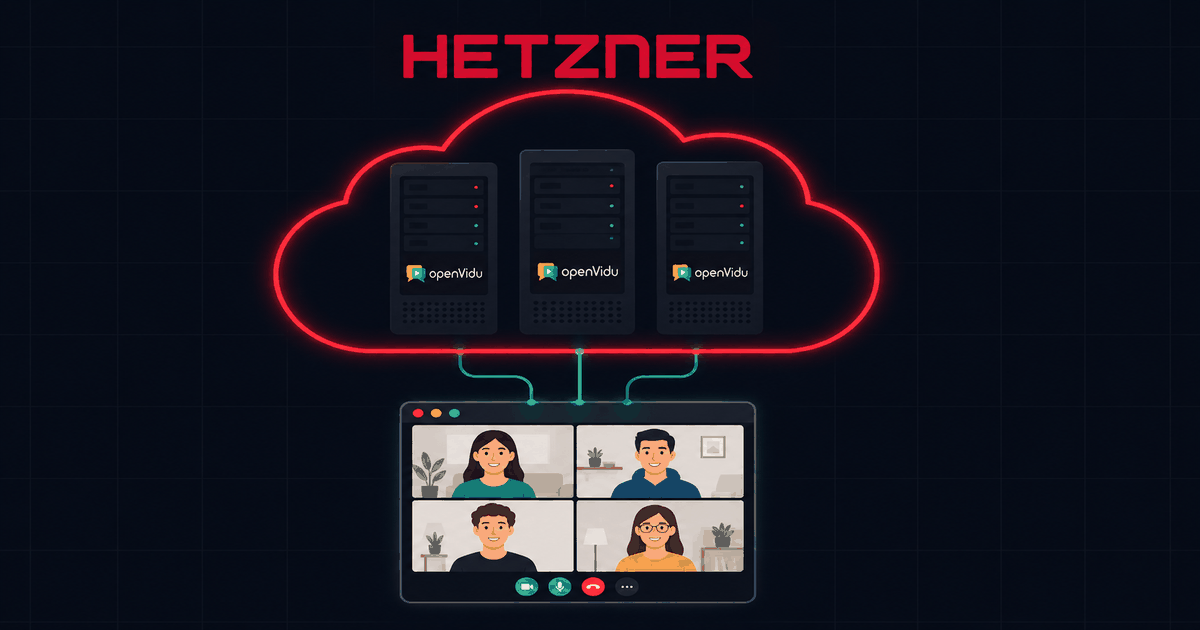
OpenVidu servers inside a Hetzner cloud serving a video call

This post is a getting-started guide to OpenVidu on Hetzner Cloud. It gathers in one place all the steps needed to go from an empty Hetzner account to a working OpenVidu deployment in a few minutes: which instance to pick, which ports to open, and the one command that installs everything. It is deliberately shorter than the official self-hosting documentation; the goal here is a running deployment today, not covering every option.

Building an AI agent for transcribing and summarizing audio calls

Header image: a microphone turning into text inside an audio call

With the world being flooded with all kinds of agents, bots, and AI services, let's keep things grounded and code something tangible in a few simple steps. Let's build an AI agent that helps people in an audio call. Our agent will:

  1. Store the full transcript of the meeting in a text file.
  2. Send live captions to everyone in the call.
  3. When someone joins late, send them a private summary of what they missed.

We'll be using OpenVidu as our media server, and LiveKit Agents Python framework to build our agent. These tools handle all the hard parts of real-time audio transport, so we can focus on our agent features.